PDR vs. traditional repair: Which method is better?
When a dent appears on your car, you face an important decision – which repair method to choose? Traditional body shops often offer filling and repainting, while the PDR (Paintless Dent Repair) method allows a repair without touching the paint. Let's take a look at a detailed comparison of both methods so you can make an informed decision.
Comparison of PDR and conventional repair
PDR repair:
- ✓ Preserves the original paint
- ✓ Fast repair (1 day)
- ✓ Up to 50% cheaper
- ✓ Eco-friendly – no chemicals
- ✓ Preserves the vehicle's value
- ✓ No risk of color mismatch
Traditional repair:
- ✕ Requires sanding and repainting
- ✕ Longer repair time (3–7 days)
- ✕ Higher costs
- ✕ Possible color differences after repainting
- ✕ Reduces the vehicle's value
- ✕ Uses chemicals and solvents
How does a PDR repair work?
The PDR method uses special tools and techniques that allow technicians to access the back side of the damaged part of the car body. Using precise movements and pressure, they gradually straighten the dent without damaging the paint. The whole process is non-invasive and preserves the vehicle's original factory finish.
PDR repair procedure:
- Thorough analysis of the damage and access points
- Preparation of special tools according to the type of damage
- Access to the back side of the damage (removal of panels or access through existing openings)
- Gradual straightening of the dent using precise movements and pressure
- Checking the result and fine-tuning if needed
- Final quality inspection
Traditional repair procedure:
- Sanding the damaged area and removing the paint
- Straightening the metal using a hammer and other tools
- Applying filler and letting it cure
- Sanding the filler smooth
- Applying primer
- Painting and applying clear coat
- Polishing and final finishing
When is the PDR method suitable and when is a traditional repair needed?
PDR is ideal for:
- ✓ Small and medium dents without paint damage
- ✓ Hail damage (even more extensive)
- ✓ Dents from doors, shopping carts and minor accidents
- ✓ Owners who want to preserve the original paint and the vehicle's value
- ✓ Situations where you need a fast repair
A traditional repair is necessary when:
- ✕ The paint is damaged (scratches, cracks)
- ✕ The dents are very deep with deformation of the metal
- ✕ The damage is on a panel edge or in an area with double-layer metal
- ✕ The metal has been torn or perforated
- ✕ An entire body part needs to be replaced
Economic comparison of both methods
Economic aspects are often the deciding factor when choosing a repair method. PDR offers significant savings not only in terms of direct repair costs, but also from the long-term perspective of the vehicle's value.
| Aspect | PDR method | Traditional repair |
|---|---|---|
| Average repair price | CZK 800 – 5,000 | CZK 3,000 – 15,000 |
| Repair time | 1–8 hours | 3–7 days |
| Impact on vehicle value | None (original paint preserved) | Reduction of up to 10–20% |
| Warranty | Lifetime warranty on the work performed | Usually 2 years |
| Need for a rental car | Usually not (same-day repair) | Often yes (multi-day repair) |
Examples from practice
Let's look at specific examples of repairs we have carried out in our workshop and a cost comparison between PDR and the traditional method:
Example 1: Dent on a door
An 8 cm dent on the front door caused by an impact from a shopping cart.
- PDR method: CZK 3,700, done in 2 hours
- Traditional repair: CZK 6,800, done in 4 days
- Savings: CZK 3,100 and 3.5 days of time
Example 2: Hail damage
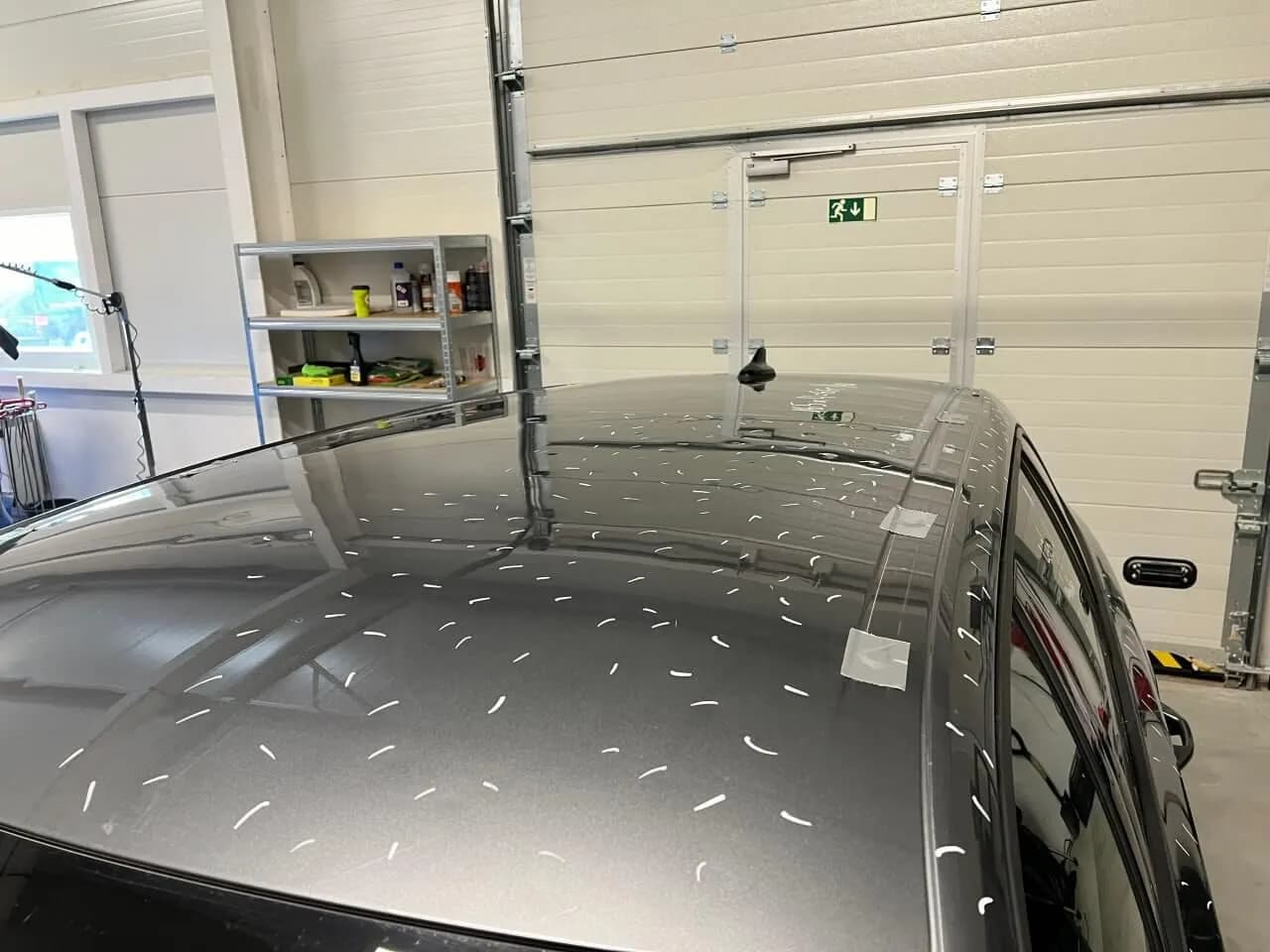
Roof and hood with 35 dents after a hailstorm, without paint damage.
- PDR method: CZK 12,000, done in 2 days
- Traditional repair: CZK 28,000, done in 7 days
- Savings: CZK 16,000 and 5 days of time
Conclusion: Which method is better?
Our comparison clearly shows that the PDR method offers a number of advantages over a traditional repair – it is faster, cheaper and gentler on your vehicle. Preserving the original paint is key to maintaining the vehicle's value, which is especially important for newer and premium cars.
However, PDR is not suitable for all types of damage. If the paint is compromised or the dent is too deep, the traditional method may be the only option. Ideally, have the damage assessed by an expert who will recommend the most suitable repair method.
At GAR Service we offer a free consultation and damage assessment. Our technicians will honestly recommend the most suitable repair method for your specific damage, whether it is PDR or a traditional repair.
Expert advice: If your vehicle has a dent without paint damage, always consider the PDR method first. Not only will you save money and time, but you will also preserve the original paint and thus the value of your vehicle. On top of that, this method is gentler on the environment because it does not use chemicals and solvents.
Need a dent repaired?
Send us photos of the damage — a master calls you back with an estimate. Fixed within 24 hours.