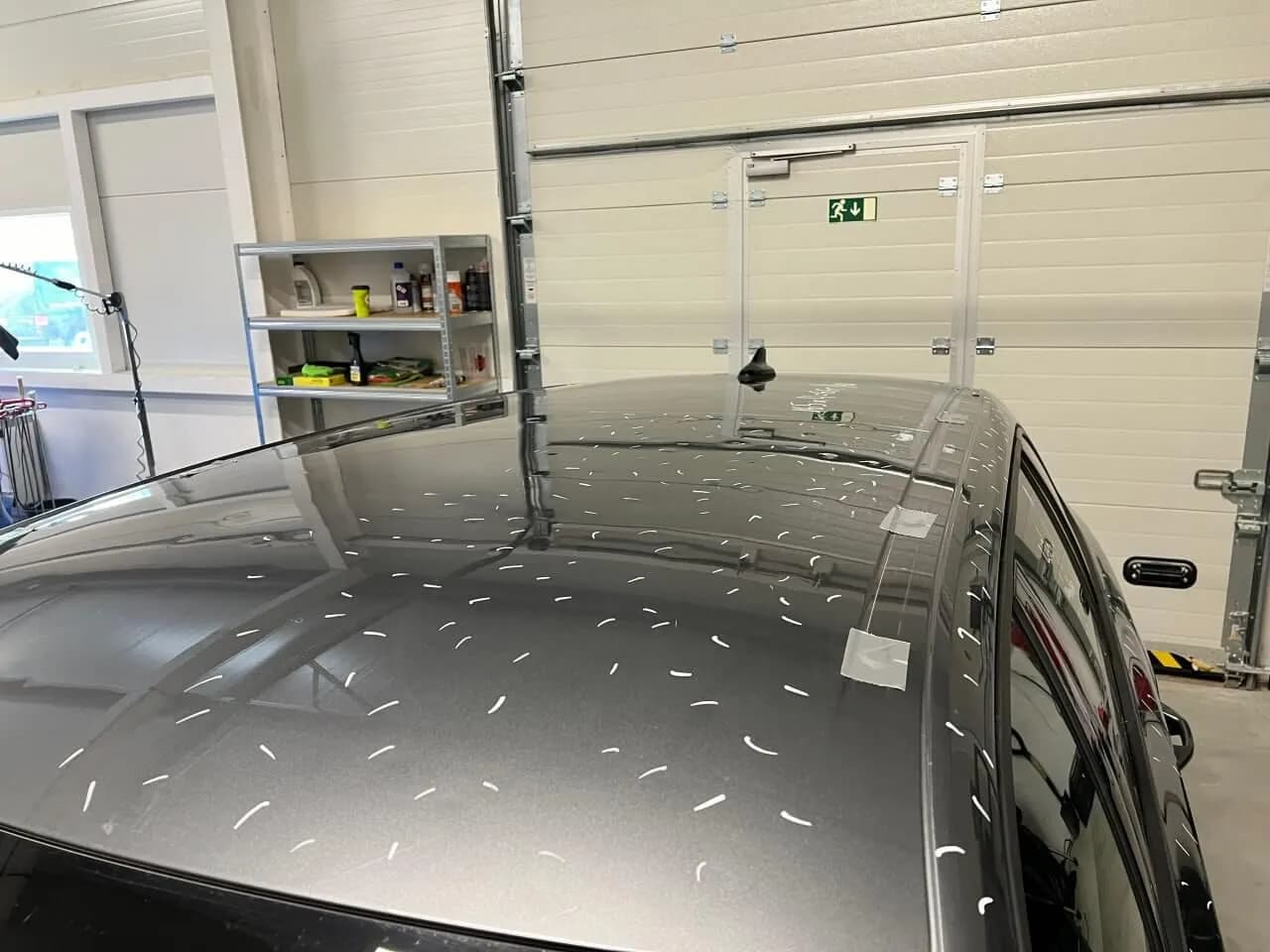
How to remove dents on a car without repainting?
Dents on a car are a common problem that vehicle owners encounter. They often occur while parking, during hail or in minor accidents. Traditional body shop repairs can be expensive and time-consuming. Fortunately, there is a modern method called PDR (Paintless Dent Repair) that makes it possible to repair dents without repainting. How does this technology work and why is it the ideal choice for your car?
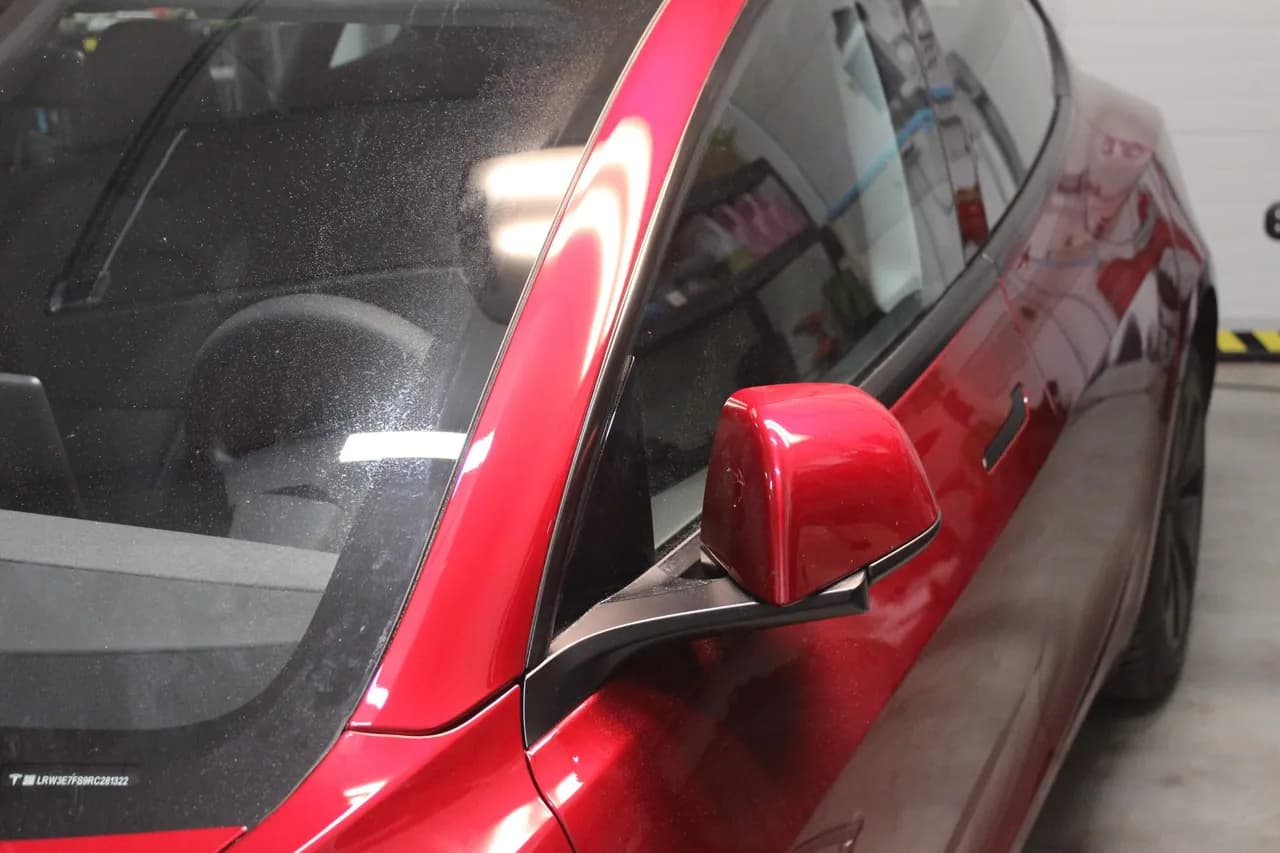
How does PDR work?
PDR is a dent repair process that uses special tools to gently straighten the damaged part of the car body without any sanding, filling or repainting. Technicians work with precise methods to preserve the original paint and the structure of the metal. The advantages of this method are clear:
- ✓Preservation of the original paint – it does not damage the car's factory finish
- ✓Fast repair – most repairs take only a few hours
- ✓Lower costs – PDR is up to 50% cheaper than a conventional repair
- ✓Eco-friendly solution – no chemicals and no painting process
The history of the PDR method
The PDR method has an interesting history. It was developed at Mercedes-Benz factories in the 1950s as a way to repair damage on show cars. Technicians needed a method that would allow a quick repair without repainting so that the cars could be put on display immediately. Over time, this technique spread to regular body shops, and today it is the standard for repairing dents without damaging the paint.
Traditional PDR tools
Rods and hooks
For precise access to the back side of the dent and its gradual straightening
Reflector boards
For detailed visualization and inspection of surface irregularities during the repair
LED lighting
For highlighting even the smallest irregularities and checking the quality of the repair
Glue pulling systems
For gently pulling dents out from the outside of the car body
Modern technology in PDR
3D scanning
For precise digital analysis of the extent and depth of the damage
Induction heaters
For working effectively with harder materials and more complex dents
Vacuum systems
For the controlled pulling of larger dents without damaging the paint
Special LED lamps
For detecting microscopic irregularities and a flawless final inspection
When is PDR suitable?
- ✓Dents caused by hail
- ✓Damage caused by careless parking
- ✓Minor mechanical damage (e.g. a shopping cart)
- ✓Repairs of smaller dents where the paint is intact
Did you know? The PDR method was originally developed at car factories to repair damage that occurred during the manufacturing process. Today this technology is available to the general public and has become the preferred method of dent repair.
The PDR repair process
Repairing a dent using the PDR method is a precise process that requires experience and expert knowledge. Let's look at the individual steps:
| Step | Description | Importance |
|---|---|---|
| 1. Damage analysis | The technician assesses the extent and type of damage and identifies access points | Critical |
| 2. Vehicle preparation | Removal of the necessary parts to gain access to the back side of the dent | High |
| 3. Surface lighting | Use of special lighting to highlight irregularities | Medium |
| 4. Dent repair | Gradual straightening using special tools | Critical |
| 5. Quality control | Final inspection of the surface and any fine-tuning | High |
Limits of the PDR method
Although PDR is a very effective method, it does have its limits. Not all types of damage can be repaired with this method.
Ideal cases for PDR:
- ✓ Small and medium dents without paint damage
- ✓ Hail damage
- ✓ Dents on flat surfaces
- ✓ Damage on doors, the hood or the roof
- ✓ Dents with good access from behind
When PDR cannot be used:
- ✕ Damaged or cracked paint
- ✕ Extremely deep dents
- ✕ Dents on panel edges
- ✕ Damage where the structure of the metal is compromised
- ✕ Dents in places with limited access
How to find out the repair price?
The price of the repair depends on several factors that affect the difficulty and duration of the work:
Dent size
The bigger the dent, the more demanding and expensive the repair. It is usually measured in centimeters.
Location on the vehicle
Dents in hard-to-reach places (e.g. with double-layer metal) are more difficult to repair.
Dent depth
Deeper dents require more time and work to be straightened perfectly.
Number of dents
With a larger number of dents (e.g. after hail), a volume discount is usually applied.
Tip from the professionals: For the most accurate price estimate, photograph the dent from several angles and in good lighting. Place a reference object next to the dent (e.g. a coin or a ruler) so that its size can be estimated more accurately.
Conclusion: Why choose PDR?
The PDR method is a modern, effective and economical way to repair dents on a vehicle. Preserving the original paint is key to maintaining the vehicle's value, which is especially appreciated by owners of newer and premium cars. The speed of the repair and lower costs are further significant advantages over traditional methods.
If your vehicle has a dent, consider the PDR method first. Not only will you save time and money, but you will also help protect the environment thanks to the absence of the chemicals and solvents used in conventional repainting.
At GAR Service we specialize in PDR repairs, and our technicians have years of experience repairing all types of dents. Do not hesitate to contact us for a free consultation, or use our online estimate to quickly find out the price.
Need a dent repaired?
Send us photos of the damage — a master calls you back with an estimate. Fixed within 24 hours.